Why balance deserves its own attention
More than one in four adults age 65 or older falls each year, according to the National Institute on Aging. Falls are not an inevitable part of aging, and many can be prevented by addressing physical, medical, and environmental risk factors.
Train balance on purpose
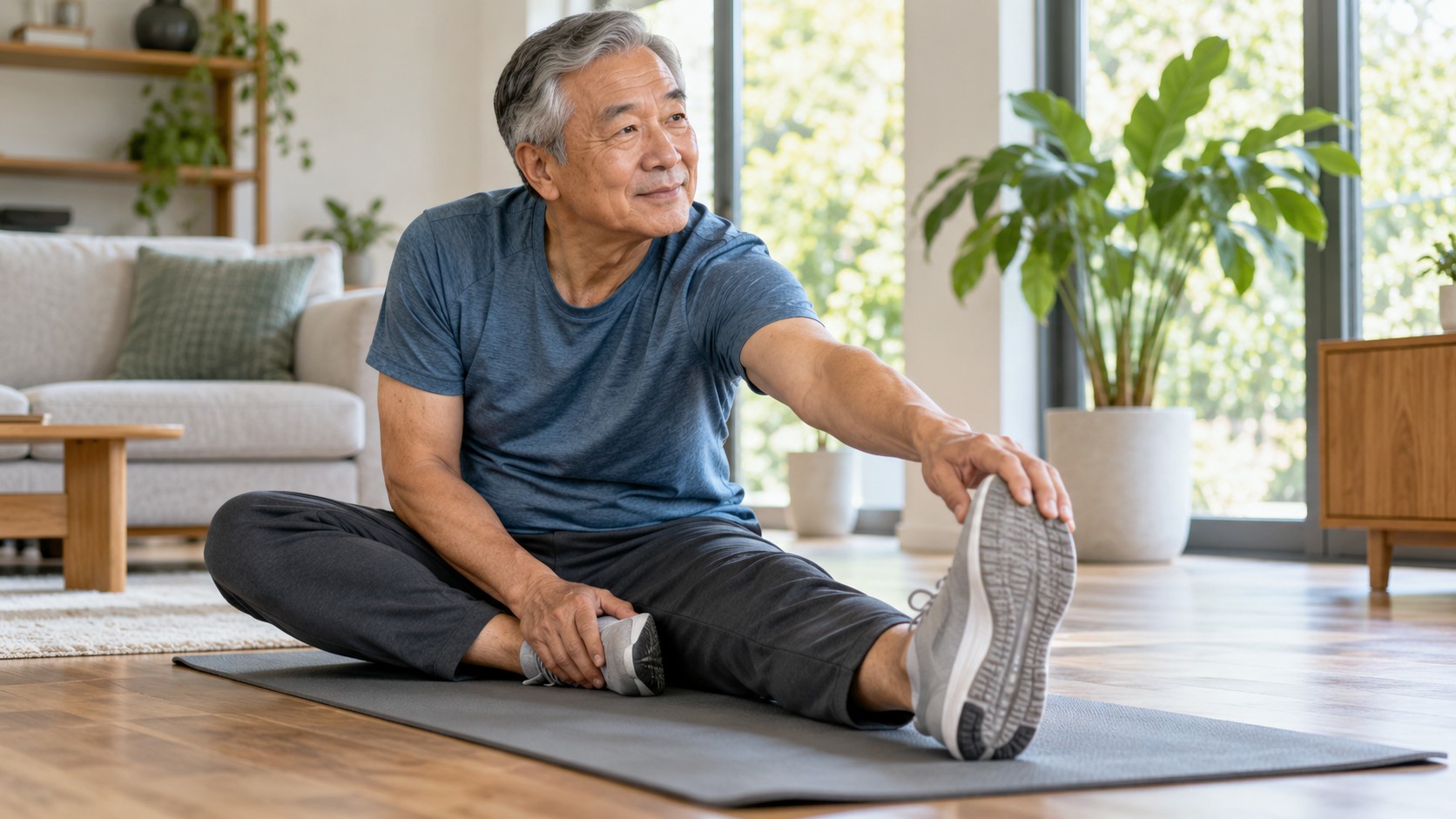
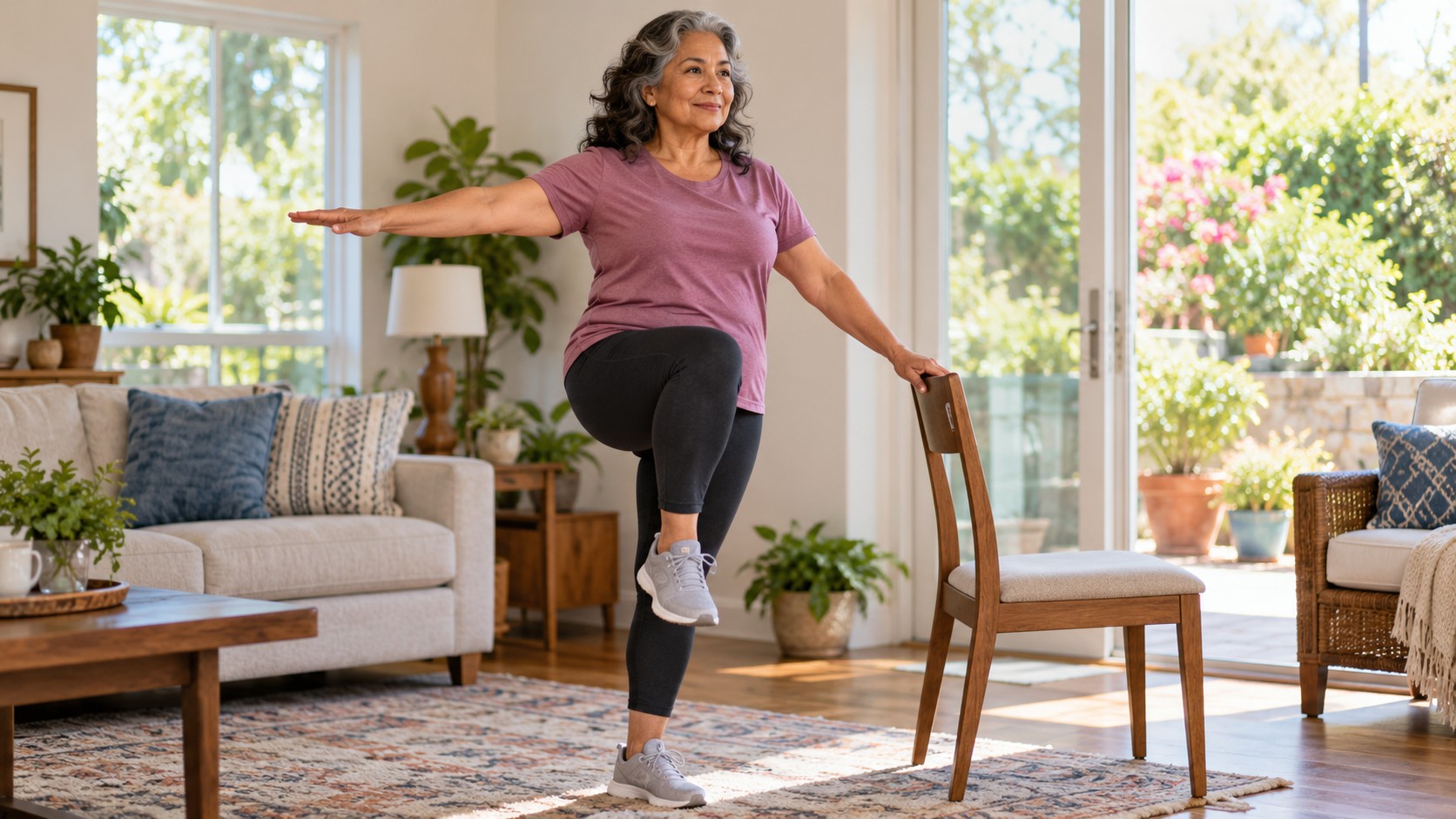
CDC guidance for older adults includes balance activity each week. Examples from NIA include tai chi, yoga, standing on one foot, and other exercises that challenge stability in a controlled way.
Build stronger legs
Leg strength supports balance. Sit-to-stands, supported squats, step-ups, calf raises, and other appropriately scaled resistance exercises can make everyday movement more secure.
Review medications and vision
NIA and CDC both recommend discussing medications that may cause dizziness or sleepiness with a health professional. Regular vision checks are also important because changes in vision can affect how safely you move through your environment.
Make the home easier to navigate
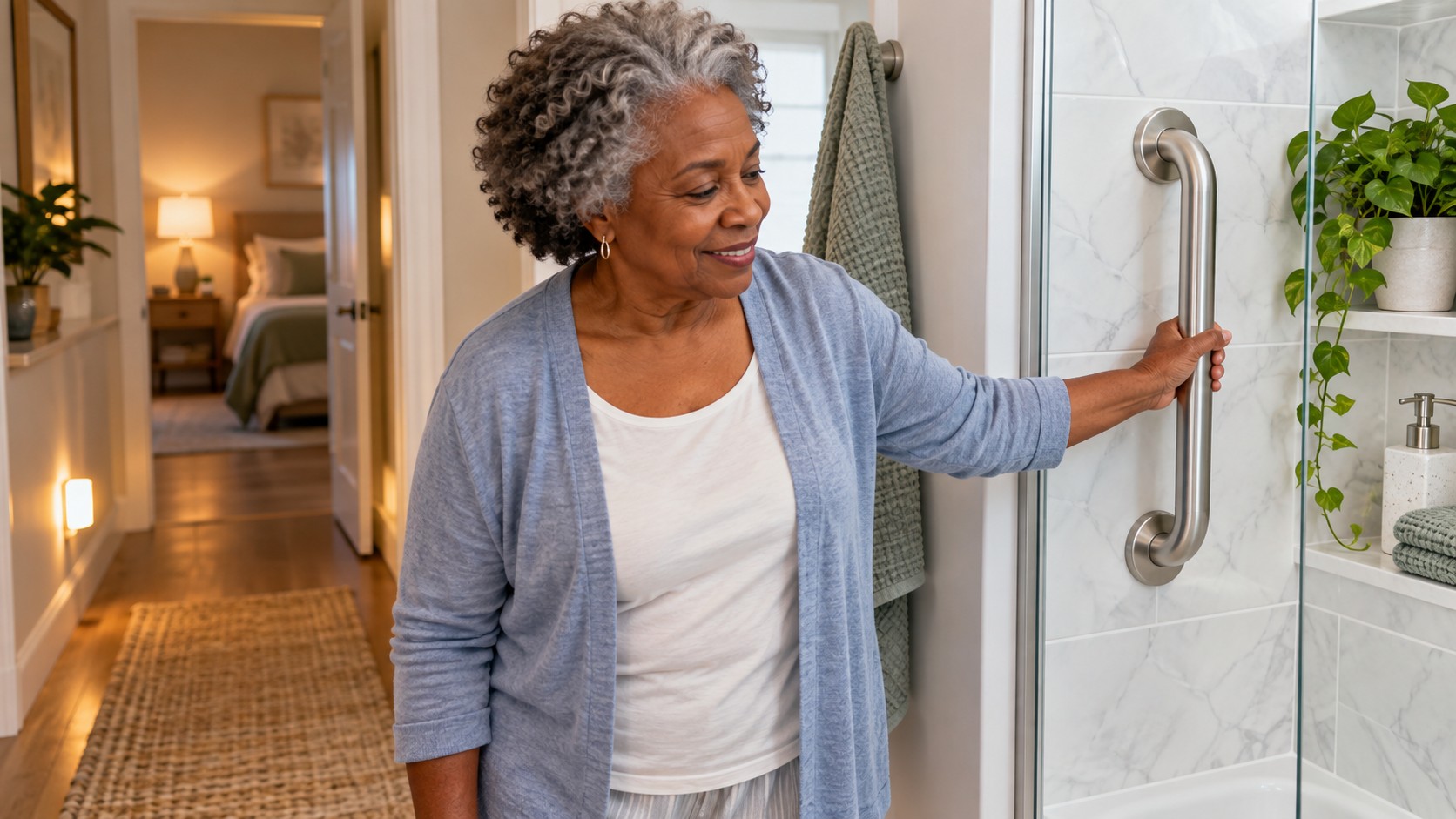
Trip hazards, loose rugs, poor lighting, slippery bathroom surfaces, and cluttered pathways can all increase fall risk. Improving the environment is often one of the fastest ways to lower risk.
Do not ignore dizziness or repeated falls
New dizziness, fainting, repeated falls, or a sudden change in balance should be discussed with a health professional. Balance problems can have many causes, and exercise alone is not a substitute for evaluation when symptoms are new or concerning.
A simple weekly approach
Combine two days of strength work with short balance sessions on several days. Start with support nearby, such as a sturdy counter, and reduce support only as control improves.
Sources we checked
National Institute on Aging — Falls and Fractures in Older Adults
CDC — Preventing Falls and Hip Fractures
National Institute on Aging — Three Types of Exercise Can Improve Your Health and Physical Ability