Start with the places you walk every day
Many falls happen at home. The National Institute on Aging recommends keeping walking areas tidy, securing carpets, removing throw rugs, improving lighting, and keeping cords and low furniture out of traffic paths.
Stairs and hallways
Use secure handrails on both sides of stairs when possible. Make sure stairways and long halls are well lit, with switches that are easy to reach. Motion-activated night lighting can help illuminate routes used after dark.
Bathrooms
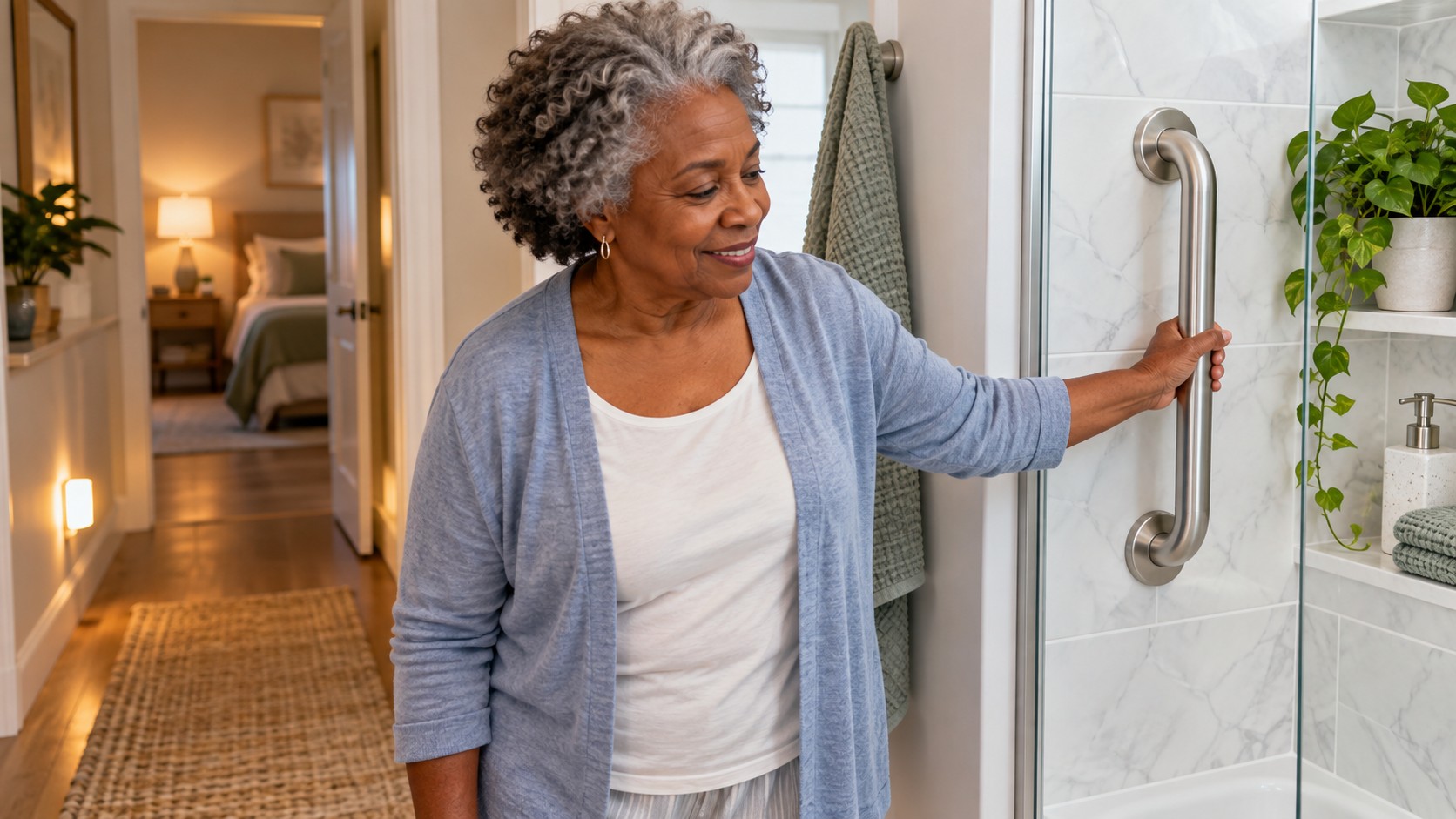
Bathrooms combine hard surfaces with water, so they deserve extra attention. NIA recommends grab bars near toilets and inside and outside tubs or showers, plus nonskid surfaces where floors may become wet.
Bedrooms
Keep a clear path from the bed to the bathroom. Place a light or switch within easy reach, and keep a charged phone nearby. Avoid storing frequently used items where you need to climb or stretch awkwardly to reach them.
Kitchens
Store frequently used items between waist and shoulder height when practical. Clean spills promptly. If prolonged standing is tiring or affects balance, preparing food while seated may be safer.
Entrances and outdoor areas
Repair uneven steps, add nonslip material where surfaces become slick, clear branches and debris, and keep porch or entry lighting available for nighttime returns.
Your 15-minute safety sweep
Walk through the home with fresh eyes: look for loose rugs, dark hallways, cords, unstable furniture, slippery bathroom surfaces, and items stored too high. Fix the easiest hazards first, then make a short list of improvements that require tools or professional help.
Sources we checked
National Institute on Aging — Preventing Falls at Home: Room by Room
National Institute on Aging — Home Safety Tips for Older Adults