
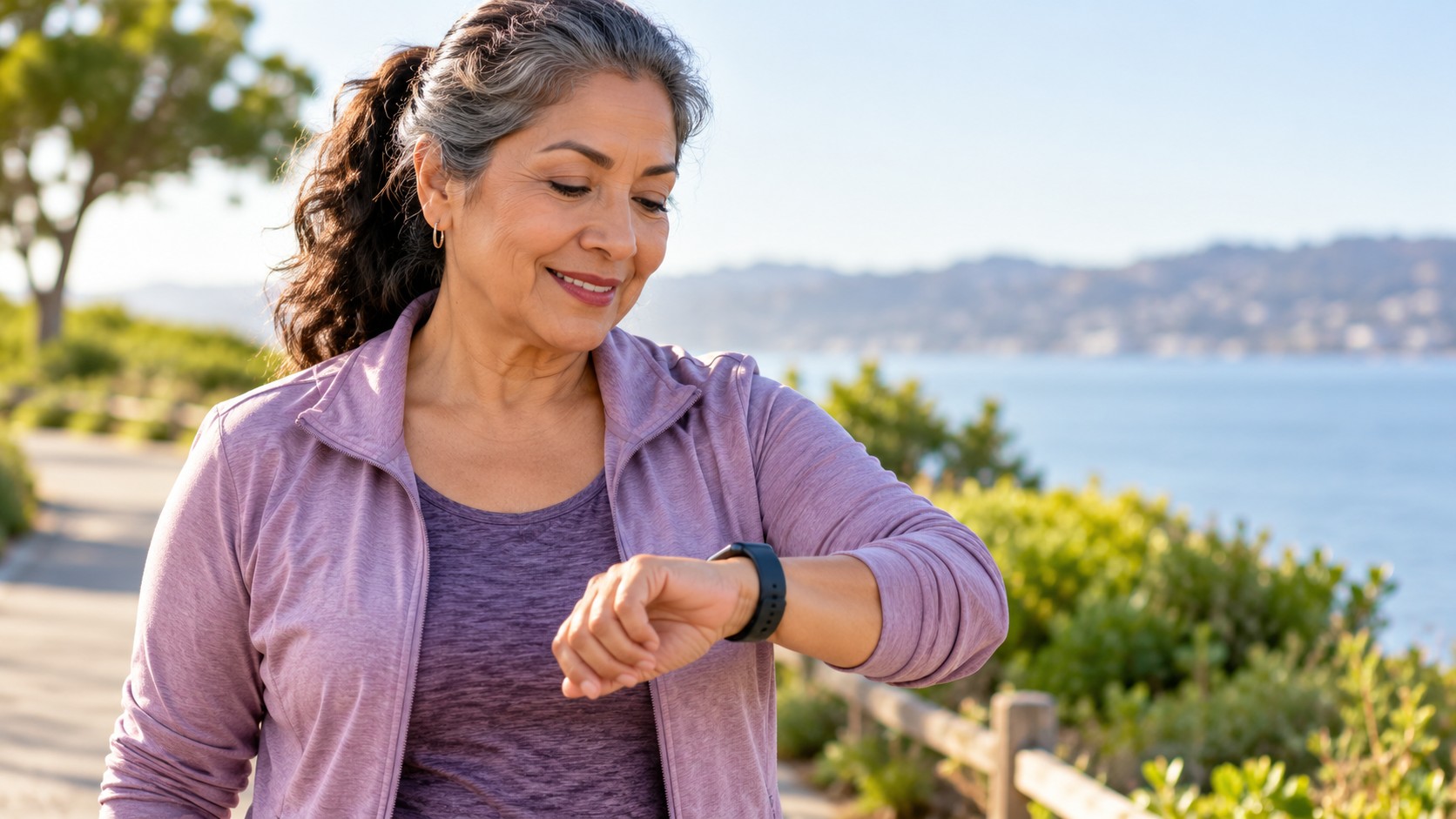
Why people over 50 consider trackers in the first place
For many adults, a tracker is appealing because it promises feedback. It can count steps, estimate sleep, display heart rate, and nudge you to move. That can be genuinely helpful—especially if you are trying to build consistency or become more aware of your routines.
The challenge is that “more data” is not always the same as “better decisions.” A tracker is useful only if the information helps you take practical action.
What trackers tend to do well
Most mainstream trackers are good at giving a general picture of movement habits. They can help you notice whether your activity is steady, falling off, or improving over time. For many people, that habit feedback is the single most valuable feature.
Many devices are also good at showing overall trends in resting heart rate, basic workout logging, and approximate sleep timing. Trend awareness can be useful even when the measurements are not perfect down to the decimal point.
Where expectations should stay realistic
Trackers can estimate sleep, stress, readiness, calories burned, and other metrics, but those numbers are often more approximate than they appear. A wearable may be useful for patterns and trends while still being too imprecise for medical conclusions.
That is why Better Years Verified looks at devices through a practical lens: what they are likely to help with, what they may overstate, and how easy they are for everyday adults to use.
Who benefits the most?
Trackers are especially helpful for people who like feedback and are motivated by visible progress. If seeing step counts, walking streaks, or heart-rate trends encourages you to stay active, a wearable may support your goals.
On the other hand, if tracking makes you anxious or if you know you will stop wearing the device after two weeks, a wearable may add more clutter than value.
What to look for before buying
Start with the basics: comfort, battery life, readability, and ease of setup. If the screen is hard to read, the app is confusing, or charging is annoying, the device may not last in your routine no matter how advanced it is.
Then think about the main job. Are you mainly trying to walk more, watch your resting heart rate, or keep an eye on sleep timing? Buy for the goal you actually have rather than the marketing language that sounds impressive.
Features that matter most for many adults 50+
Simple activity tracking, heart-rate visibility, easy-to-read screens, and a comfortable band often matter more than long feature lists. Some readers may also value large text, phone notifications, or fall-detection-style safety features if offered by a given device.
When a tracker is not enough
A wearable is not the right tool for diagnosing chest pain, shortness of breath, fainting, concerning blood-pressure issues, or other meaningful symptoms. It can sometimes prompt useful questions, but it should not replace appropriate clinical evaluation.
A Better Years Verified buying rule
If a tracker helps you move more, notice patterns, or stay engaged with healthy habits, it may be worth it. If it mostly adds guilt, confusion, or numbers you do not know how to use, it may not be solving a real problem.
The bottom line
Yes, health trackers can help—but mostly as awareness tools. Choose one that supports a clear purpose, keep expectations realistic, and let the device serve your health goals rather than dominate them.